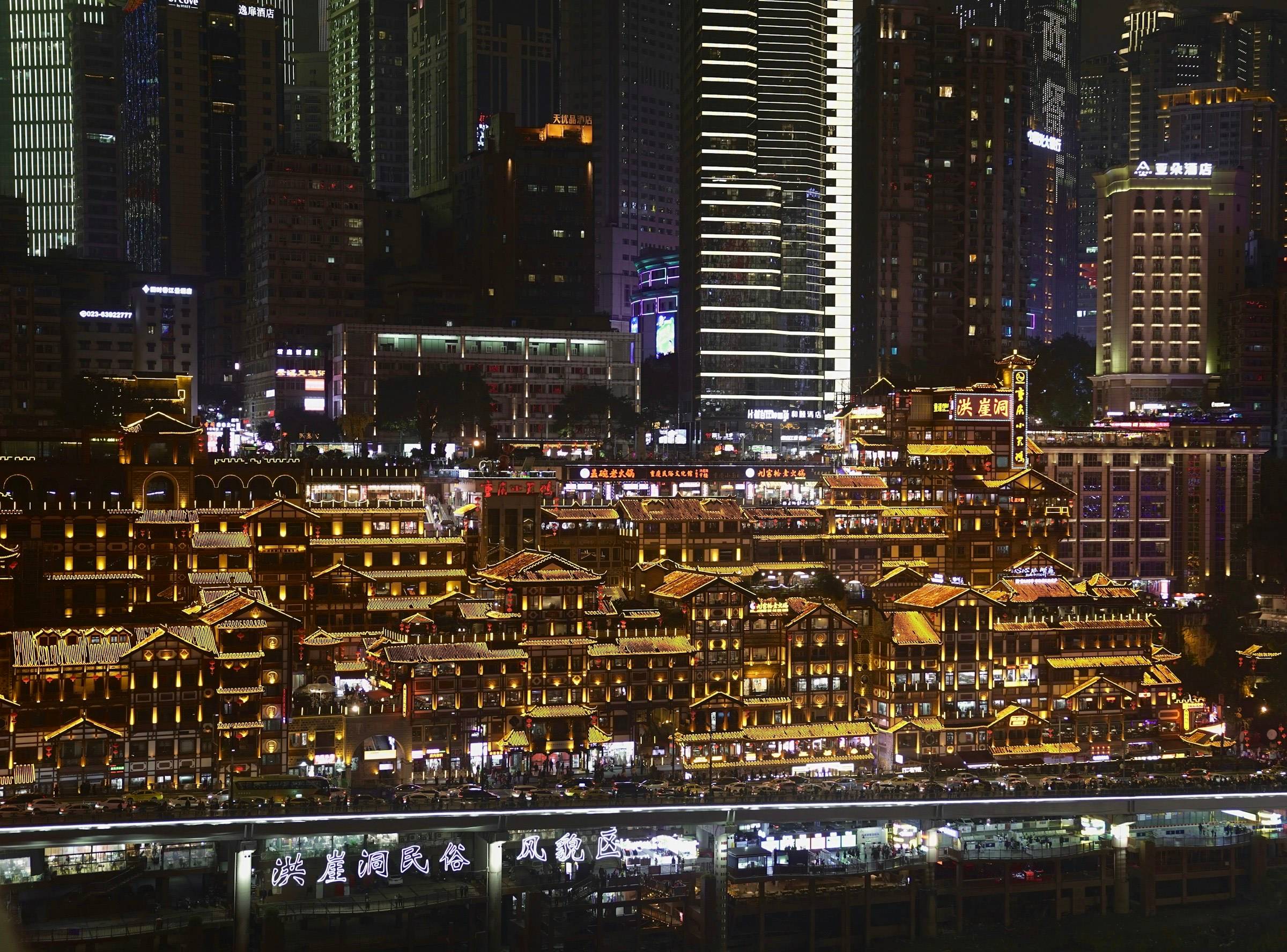
A three-day Chongqing itinerary needs more than a list of map pins. Around Hongyadong, the city’s own visitor guide describes buildings arranged around sharp changes in elevation. Plan for the entrance and street level you need, then choose a small group of stops for each day.
Start with an easy orientation walk, give hillside streets their own day, and keep the rail-viewing stop optional before departure. Add the night photography route if it interests you.
Start with your entry and departure checks
For arrival at Chongqing Jiangbei Intl Airport (CKG), use the transit checker to review nationality, onward travel, and the estimated deadline. The 240 hours start at 00:00 on the day after entry, in Beijing time (Asia/Shanghai). Use the estimate for planning and follow the stay permission issued at entry.
Treat arrival, entry procedures, the journey to your hotel, and rest as separate blocks. Then reserve time before your onward flight for luggage collection, the airport journey, and the operating airline’s deadlines. The time between scheduled landing and takeoff is not all sightseeing time. If you arrive late or depart early, shorten the plan before adding reservations.
The permitted area for this airport includes Chengdu, so you can plan a stay in both cities. See the full permitted area below. Where a province has a city list, stay within those cities.
Where you may travel
Entry port: Chongqing Jiangbei Intl Airport (CKG). A restricted province includes only the cities or prefectures listed below.
24 provinces, autonomous regions and municipalities
- BeijingProvince-wide / municipality-wide
- TianjinProvince-wide / municipality-wide
- HebeiProvince-wide / municipality-wide
- ShanxiOnly: Taiyuan, Datong
- HeilongjiangOnly: Harbin
- LiaoningProvince-wide / municipality-wide
- ShanghaiProvince-wide / municipality-wide
- JiangsuProvince-wide / municipality-wide
- ZhejiangProvince-wide / municipality-wide
- AnhuiProvince-wide / municipality-wide
- FujianProvince-wide / municipality-wide
- JiangxiOnly: Nanchang, Jingdezhen
- ShandongProvince-wide / municipality-wide
- HenanProvince-wide / municipality-wide
- HubeiProvince-wide / municipality-wide
- HunanProvince-wide / municipality-wide
- GuangdongProvince-wide / municipality-wide
- GuangxiOnly: Nanning, Liuzhou, Guilin, Wuzhou, Beihai, Fangchenggang, Qinzhou, Guigang, Yulin, Hezhou, Hechi, Laibin
- HainanProvince-wide / municipality-wide
- ChongqingProvince-wide / municipality-wide
- SichuanOnly: Chengdu, Zigong, Luzhou, Deyang, Suining, Neijiang, Leshan, Yibin, Ya'an, Meishan, Ziyang
- GuizhouProvince-wide / municipality-wide
- YunnanOnly: Kunming, Yuxi, Pu'er, Chuxiong, Honghe, Wenshan, Dali, Xishuangbanna, Lijiang
- ShaanxiProvince-wide / municipality-wide
Navigate by entrance, street, and level
Hongyadong is a useful place to understand the problem. The Chongqing government’s visitor guide describes its terraced buildings and cliffside setting. A destination that looks close on a flat map may still require a change of level. Check the walking route before deciding how much time to allow.
Before setting off, save the destination’s Chinese name, the intended entrance, and a nearby street. For a hotel, ask reception which entrance works with luggage and whether your intended approach has stairs. If step-free access matters, ask about the entire route, including the station exit and final approach.
At each stop, check where you have emerged before starting the next leg. If a pin points through a building, look for a signed public route rather than following a photograph of an interior passage. Choose a meeting point with an entrance or street name, rather than just “outside Hongyadong.”
Use these steps as a routine:
- Open the walking route, not just the destination pin.
- Check the named exit, entrance, and street against the signs around you.
- Decide whether you want stairs, another connection, or a different stop.
- Save the return destination before putting your phone away.
Keep your route short enough to change when you are tired. If the approach does not match your needs, stop and ask for directions instead of continuing down an unverified shortcut. A second destination is optional; your return to the hotel should be part of the plan.
Three days, grouped around manageable outings
- DAY 01
Find your bearings at Jiefangbei
After checking in, use Jiefangbei as an orientation stop. The city’s commercial-area guide identifies the pedestrian shopping area around the Liberation Monument. Pick a meeting point, look at the route back to your hotel, and keep the afternoon light.
If you still have energy, consider Hongyadong as a separate outing. Check the approach and return journey first. Eat before committing to a photo stop, and leave the evening open if your flight was tiring. Keep the timing flexible.
Check the permitted area - DAY 02
Choose a hillside walk at Shancheng Alley
Make Shancheng Alley the main destination. The State Council’s photo report places it along the Yangtze River, built beside mountain and cliff. Check the route’s levels before deciding how much time to allow.
Choose where to enter and where to finish, then keep a meal or rest break between outings. If the approach feels too demanding, shorten the walk. Save any second area for later instead of filling the day with river crossings simply because the points look close together on screen.
Check the permitted area - DAY 03
Liziba if time allows, then prepare to depart
The official Liziba guide identifies the station on Chongqing Rail Transit Line 2, integrated into a residential and commercial building. It also describes a dedicated viewing platform. Use signed public visitor areas for the train view; do not seek access through residential space.
Keep this outing optional on a flight day. Check the current rail route and service information before setting off. If luggage collection or the airport journey would be rushed, skip Liziba or move it to the previous day. Return for your bags before the departure block you reserved.
Check the permitted area
An optional Chongqing cyberpunk photo route
For the “Chongqing cyberpunk” look, focus on the layered buildings and rail views. A suggested sequence is Liziba for the relationship between rail and buildings, followed by a break, then Hongyadong for an evening scene. Plan a separate connection between the stops.
Scout the Hongyadong approach in daylight if you want to return after dark. Save the street and meeting point you used, then decide on the evening route from there. Check current notices before planning your evening around the lighting.
Stay within signed public areas and leave space for people to pass. If a viewpoint or route is closed, choose another outing instead of searching for an unmarked access point. Keep the hotel return plan available offline. Getting a photograph should not consume the buffer reserved for your onward journey.
Shorter stays, longer stays, and Chengdu
For two usable days, keep Jiefangbei and choose either the Shancheng walk or Liziba. Add Hongyadong if the route and your energy allow. If departure occupies much of the second day, keep that day for a short outing near your hotel. Leave enough time for departure.
For five days in Chongqing, spread the same places out. Give Shancheng Alley a day with no second reservation, separate Liziba from the night photography, and keep a flexible day for weather or rest. Check current visitor information before adding ticketed attractions.
For a Chengdu–Chongqing combination, use the Chengdu itinerary to choose the other city’s priorities. A possible five-day plan is two days in the arrival city, a transfer day, then two in the departure city. Arriving in Chongqing and flying onward from Chengdu favors that order; reverse it for the opposite flight arrangement. Let your flights set the direction.
Check the exact stations, dated service, and availability on China Railway’s official booking site. Include hotel checkout and the final station-to-hotel journey in the transfer plan. Review the separate-ticket checklist if the flights were purchased independently, and show the complete revised route to the operating airline.
Departure checks before the final outing
- Confirm your onward booking, airport, terminal, and passenger details with the airline.
- Check its current check-in and boarding deadlines and plan backward from them.
- Recheck your transit deadline before the final outing.
- Confirm luggage collection and the airport journey before adding a hillside walk or photo stop.
- Keep your passport, tickets, booking references, and hotel address available offline.
- Recheck the permitted area and onward route after any itinerary change; do not extend the plan based on an old screenshot.
Take the useful details with you
Keep the daily plan, a departure reminder, and useful phrases together in Stopover. Save enough information to explain where you are going without depending on a map pin alone. The airline makes the final boarding decision, and border inspection decides admission.
Take it with you
Keep the details close.
Your stay countdown, Chinese phrase cards, and help card, together in Stopover.
Download Stopover: China Transit